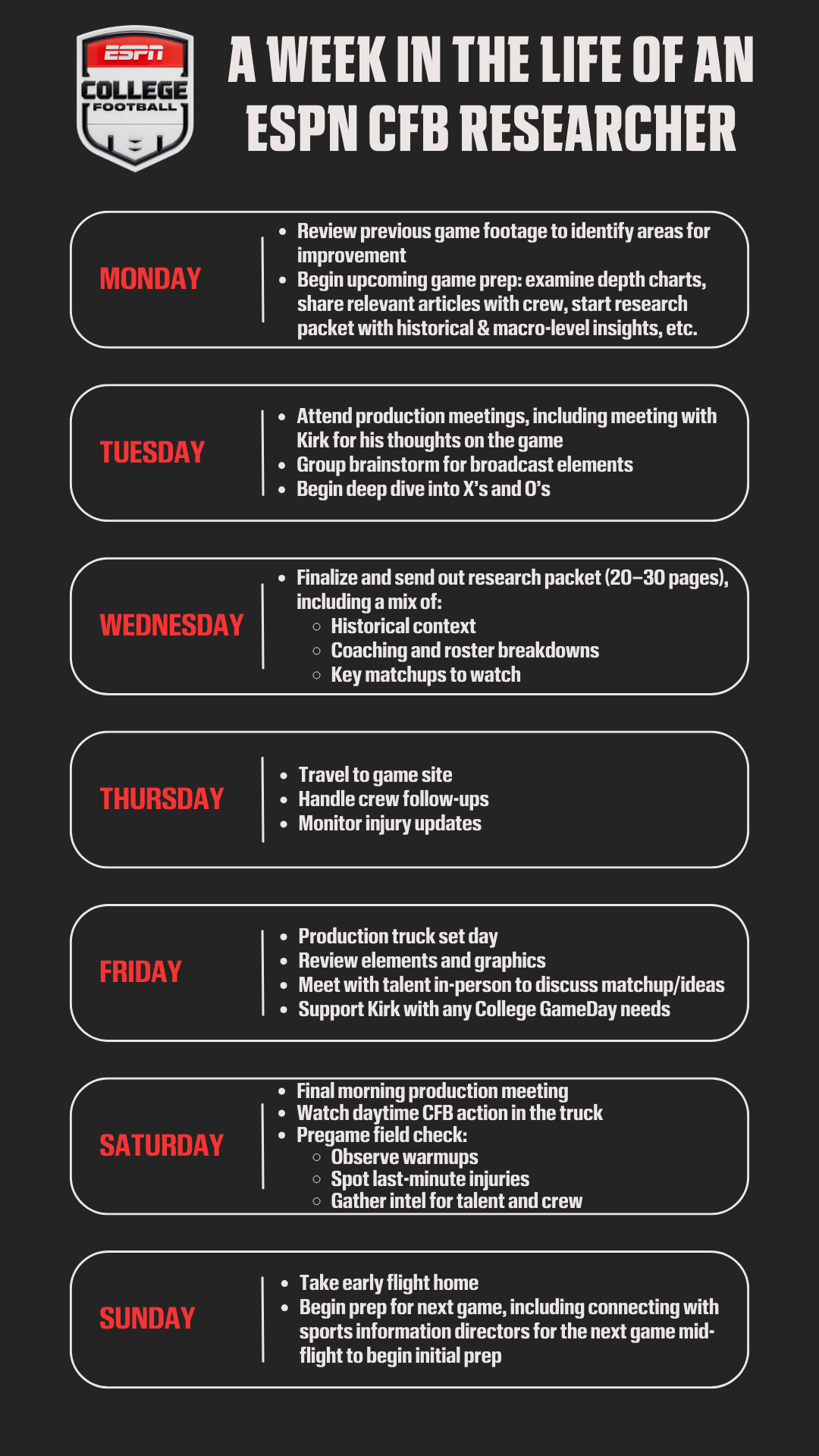
As college football ramps up each fall, ESPN’s Sports Research team is already months into its preparation. For ESPN’s coverage – especially with the SEC on ABC now a centerpiece of ESPN’s Emmy Award-winning coverage – the strategy is built on precision, collaboration and adaptability.
“The key to preparing for the season is laying the content foundation over the summer,” said Chris Burnette, ESPN associate director of sports research. “We start by writing team-focused previews and then supplement with a variety of storyline packets to create a robust preseason portfolio.”
Each ABC crew is paired with a dedicated researcher for the season, and that role has evolved significantly in recent years. “Being in the ear of talent and producers during games has elevated the level of responsibility for these roles and speaks to the trust that has been earned,” Burnette said. Researchers are now expected to provide “any type of information assistance,” not just stats.

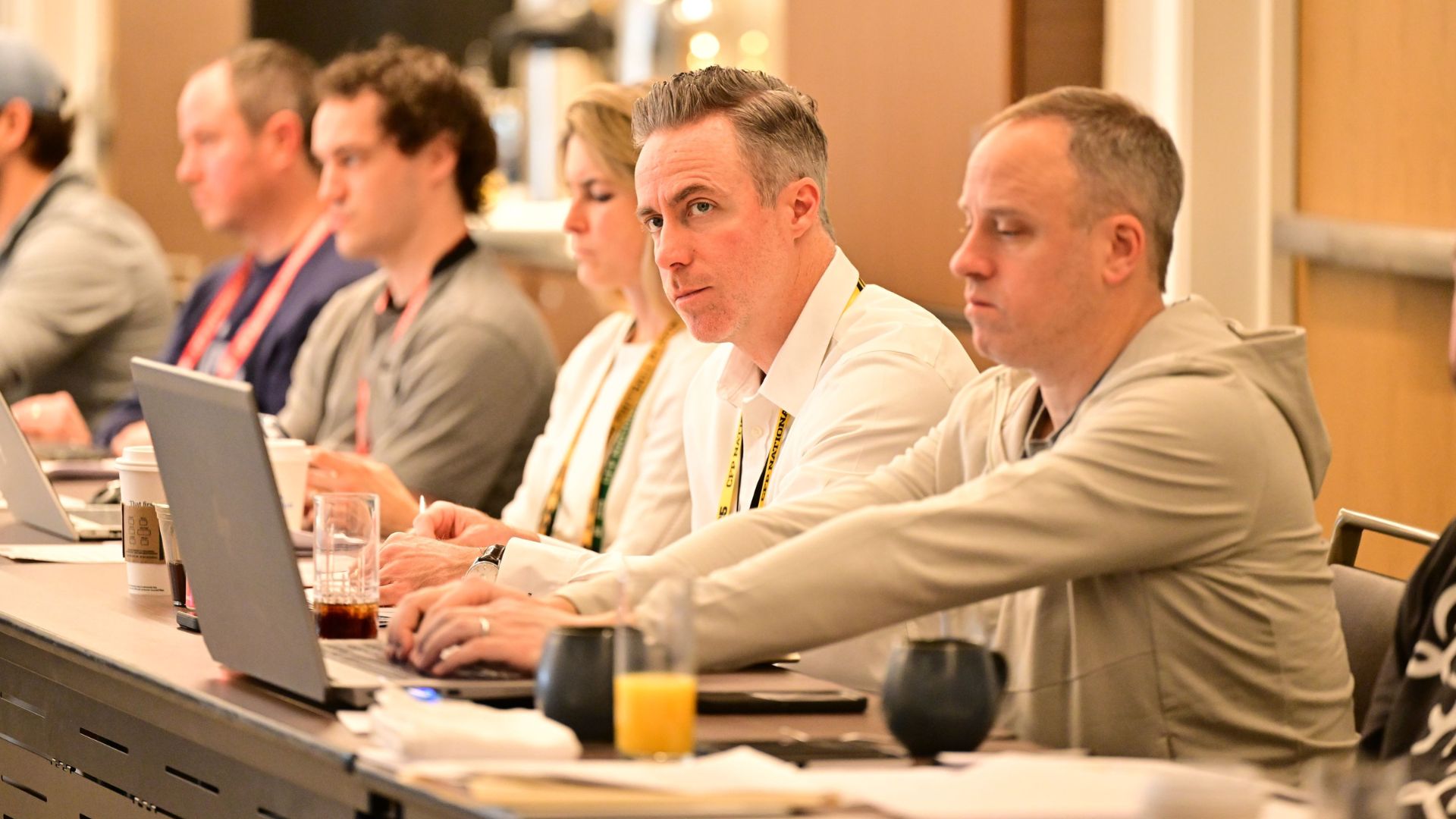
That trust is built over time, says ESPN research producer Sopan Shah, who is embedded with ESPN’s top crew of Chris Fowler, Kirk Herbstreit and Holly Rowe. He, along with senior researchers Jeremy Mills and Jake Ostrove, works directly with the respective ABC booths. “Learning what they like, dislike and how they view the game in general, I can deliver information that’s relevant to them and work with the rest of our production crew to have elements which can complement their talking points.”
Shah describes his real-time communication with talent as constant and dynamic. “I have a direct line of communication with them and can feed them information in their ear at any point,” he says. “We also have an iPad set up in the booth with our Research Teams chat (where) I can drop any notes that may be easier for Chris to read.”
The approach varies by person. “Chris is big on stats and analytics, so he’ll dive into the data and insights that we provide and be able to explain to fans in a digestible way,” Shah said. “With Kirk, I may not focus on a specific number but rather what the story is behind the stats, usually utilizing film more than data.” For Holly, “She may have a conversation with a player, and I can dive into the stats and film to provide further context on the story she tells during the broadcast.”
Burnette emphasized the importance of understanding each crew’s style. “Rule number one is to get to know your crew,” he said. “It’s imperative that these researchers spend the preseason learning more about their colleagues and how they can adapt their content support to meet the needs of the people using it.”
The team also balances on-site and remote support. “When you’re at site, your sole focus is your crew and your game and we do prioritize this setup as often as possible,” Burnette noted. Meanwhile, researchers in Bristol can assist with other assignments, maximizing impact across the department.
Much of the preparation never makes air, Shah said. “We have a great team of producers that prepare elements and graphics for all types of situations that may or may not happen, but we’re ready either way.”
He credited the elements team – Matt Brooks, Steven Kim, Jack McNamara, Ashleigh Fisher and Taylor Ostler – along with graphics AP Meghan Black and spotter Tony Granieri for making each broadcast “look smart and inform our fans.”
For Shah, the experience is personal. “I’ve always been a huge college football fan. I can say this really is a dream job.”