EDITOR’S NOTE: Scott Rasmussen is the co‑founder of ESPN, which he launched with his father, Bill Rasmussen, in 1979 after conceiving the idea a year earlier. Since leaving ESPN, Rasmussen has built a second career at the intersection of technology and public opinion, founding Rasmussen Reports and later RMG Research and the Napolitan Institute. Today, he is partnering with Google’s Jigsaw incubator on the “We the People” project, an AI‑driven initiative tied to America’s 250th anniversary that seeks deeper insight into public sentiment. He is the author of a new book, “Out of Touch: The Elite One Percent and the Battle for America’s Soul.”
In this second installment of an exclusive three‑part series for Front Row, Scott Rasmussen writes about landing Getty Oil’s crucial financing, NCAA broadcasting rights and his participation in “Sports Heaven: The Birth of ESPN,” the documentary premiering Monday, April 6 at 8:30 p.m. ET on ESPN.
A CRAZY PATH TO FINDING THE MONEY
Greg DeHart, director of the documentary on the founding of ESPN, had clearly done his homework.
Before our interview, he had taken longer researching the story than it took my father and I to go from conceiving the idea to launching the network.
That research became apparent as the documentary interview progressed. He knew enough to prompt me about some of the fun stories from that eventful year, stories that I’d long since forgotten or buried. Along the way, something surprising happened — I relaxed and found myself almost enjoying the interview. For the first time in years, it felt good to talk about the joyful zaniness of that incredibly intense, non-stop and crazy phase of our lives.
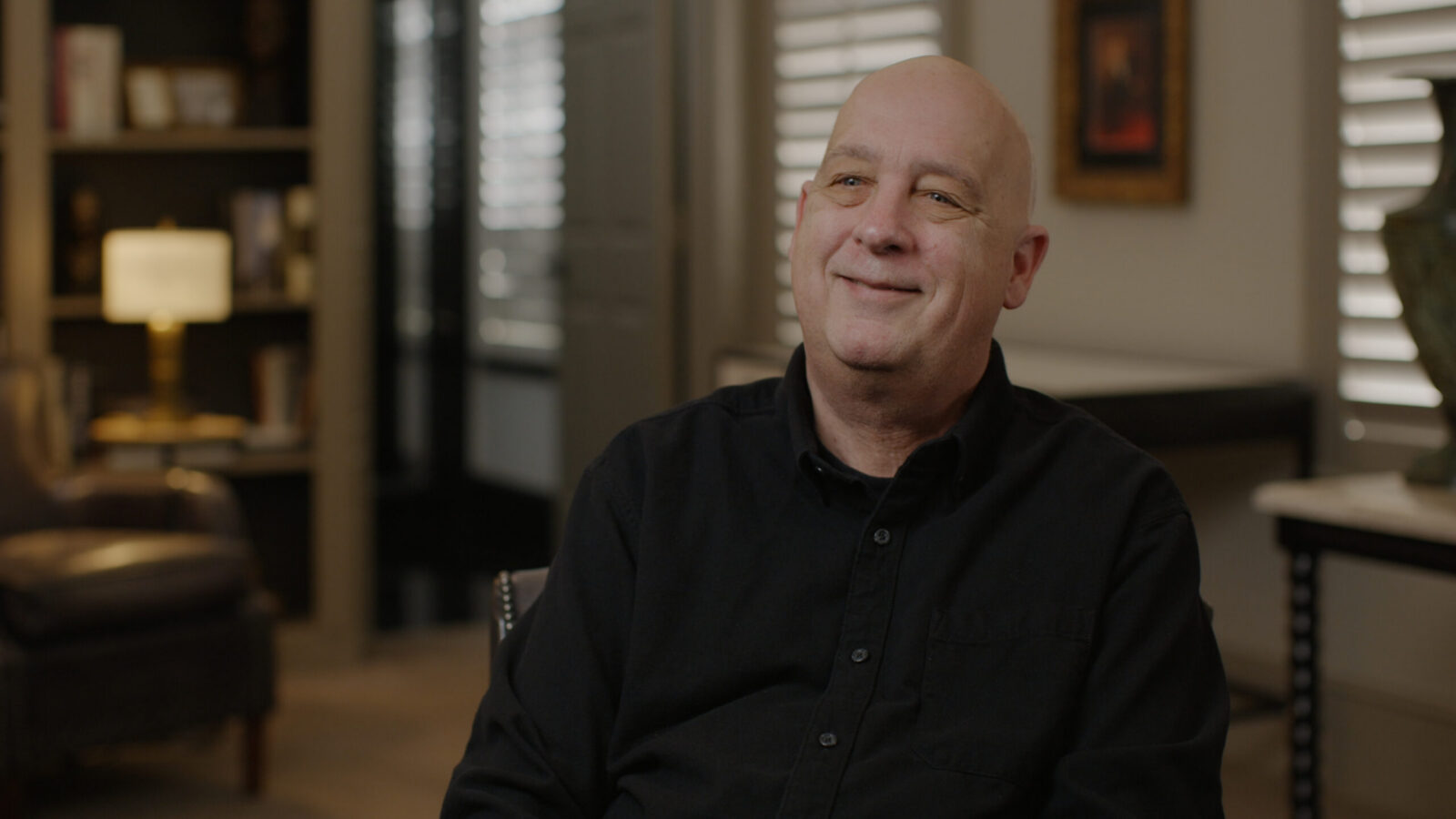
One bizarre twist came when Getty sent executive George Conner to conduct due diligence on our venture. We were terrified of George at first, but he too became a lifelong friend.
On the day George was scheduled to arrive at our Plainville, Connecticut offices, we got in early and were very nervous. Hour after hour went by without George showing up, and we began to wonder if Getty had changed their mind. George finally walked into our office around noon and had an amazing tale to tell. The license plates from his rental car were stolen and used in an armed robbery. George had spent the morning detained by the police! Welcome to Connecticut.
Not long after that, we had to make a presentation to a senior management team from Getty. For two guys with no experience pitching investments to a Fortune 35 company, that was way out of our league.
We enlisted Bob Seidenglanz, the CEO of Compact Video, to help.
Bob was the first person I pitched who actually thought our crazy idea would work and his company eventually built the initial fleet of ESPN remote trucks. For the presentation, Bob and his team built a model remote truck with the top cut away so we could show the Getty bigwigs what we were talking about. It was very well done with ESPN logos on the side and figurines sitting at all the right spots inside.
We didn’t know it at the time, but that NCAA contract would soon lead to the creation of March Madness. We got the broadcast rights for every game of the Men’s Basketball Tournament up to and including the Elite Eight round for only $5,000 a game. Nobody had ever televised all those games before, and a new cultural phenomenon was born.
After our formal presentation, my father and I were answering questions from some of the execs who hung around. One key player who stayed was Harold Berg, the Chairman of the Board.
However, he wasn’t asking questions.
The corporate titan was on his hands and knees playing with our toy truck. What an image! It wasn’t official, but I took that as a sign that Getty was going to say yes.
It seemed that every day between coming up with the idea in August 1978 and getting the initial funding from Getty in February 1979 had moments like that. Some were big and momentous like when the NCAA and Getty both said yes on the same day.
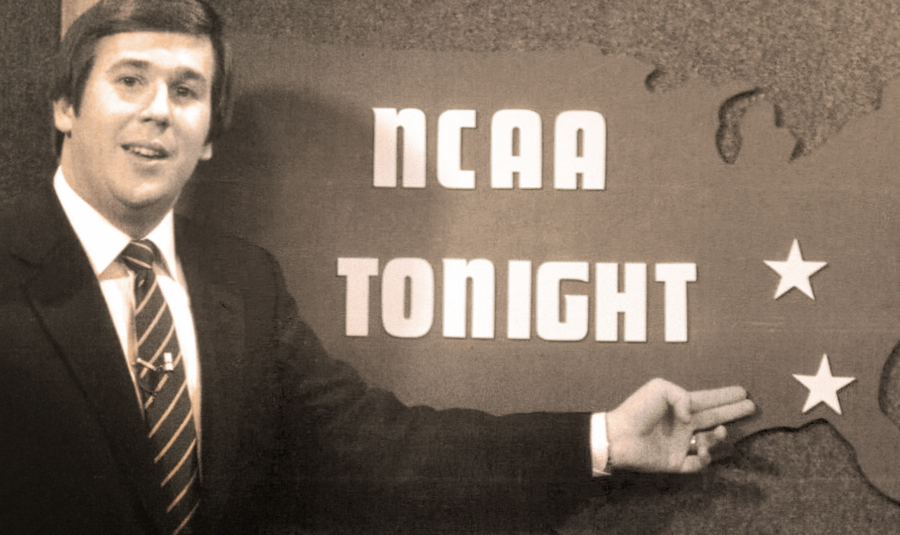 In 1980, "SportsCenter" anchor and show host Bob Ley touts "NCAA Tonight," the program that showcased men's college basketball postseason tournament coverage like never before. (ESPN Images)
 ESPN's original logo in 1979. (ESPN Images)
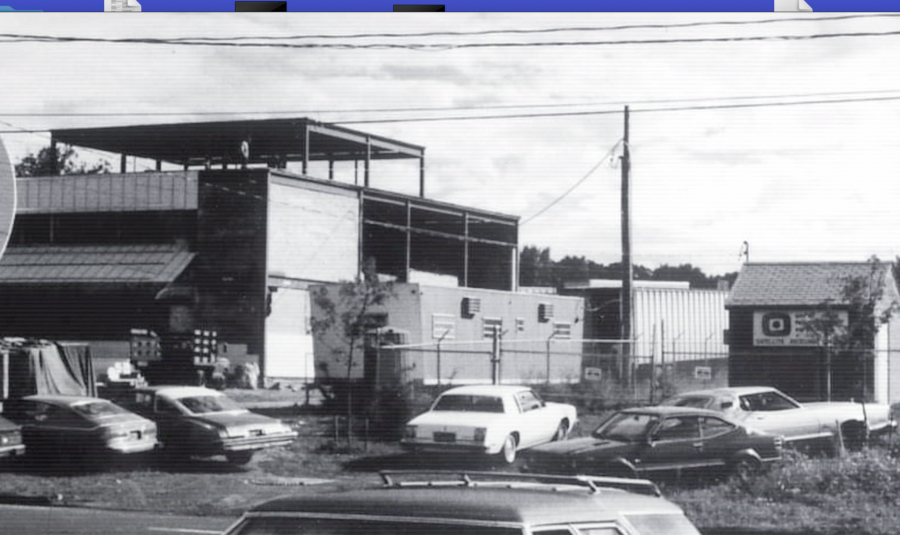 ESPN Building 1 was the launching pad. (ESPN Images)
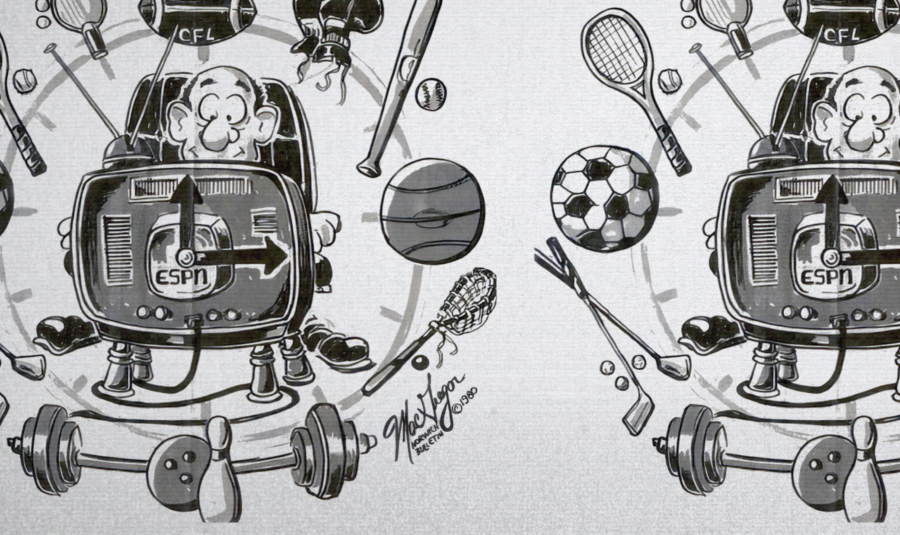 A newspaper editorial cartoon in the Norwich (Conn.) Bulletin touted ESPN's arrival. (Courtesy of the Norwich Bulletin/ESPN)
We didn’t know it at the time, but that NCAA contract would soon lead to the creation of March Madness. We got the broadcast rights for every game of the Men’s Basketball Tournament up to and including the Elite Eight round for only $5,000 a game. Nobody had ever televised all those games before, and a new cultural phenomenon was born.
Some of the moments during that six-month stretch weren’t big at all; they were just silly. One night, Getty VP Stu Evey tried to impress us by taking us to Chasen’s — a very high-end restaurant that catered to Hollywood stars. After dinner, I took a red-eye flight back to Hartford and didn’t have enough money in my pocket to buy a McDonald’s breakfast the next morning. We were cutting it very close before Getty invested.
There were countless times during those days when either my father or I thought we were finished. But every time one of us called with depressing news, the other had some exciting breakthrough to share. I don’t think we ever both felt down on the same day.
Still, when Getty finally said yes, it was as much a sense of relief as excitement.
JB was desperately reaching out to every potential investor he had introduced us to along the way. Just a week before Getty signed on, he wrote several of them explaining our “very tight time constraints.”
If we didn’t get a $5 million commitment within a couple of weeks, we would be forced to “sell off our transponder rights to the highest bidder.”
The threat of selling off the transponder and walking away was the only leverage we had against Getty.
JB used it to make sure we got at least a little equity when the oil company money started flowing. Still, that initial $5 million would last only a few months, so the selling of our idea continued. It wasn’t until May that Getty gave us the full speed ahead approval — less than four months before launch date. We still had only a handful of employees on board.
During that interim period before getting the full commitment, we learned that selling Getty was much different from living with Getty. One of the first challenges arose almost immediately after the money arrived. Stu wanted to change the name of our company to the Getty Sports Network.
My father and I pushed back hard. Our country was struggling through the second Arab oil embargo — the price of gas had just skyrocketed, people were allowed to buy gas only on certain days, lines were long and oil companies were hated.
We could not imagine a worse branding, but Stu persisted and even had some logos designed. Fortunately, he also commissioned some market research which convinced him to leave well enough alone.
My personal encounters with Stu grew ever more frustrating.
(ESPN Images)
For months, I flew from Hartford to Los Angeles every week to review budgets and projections with Stu at the Wilshire Country Club.
It’s extraordinarily difficult to do projections for a new company based upon game-changing technologies in an industry that doesn’t yet exist.
Making matters worse, I did all the early budgets by hand on 13-column analysis pads (personal computers hadn’t been invented yet), and Getty was not at all used to dealing with such an entrepreneurial venture.
Every week, we’d have a rum and Coke while I presented the latest numbers to Stu, and he told me what was wrong with them.
One week I would present what I thought (hoped) would happen, and Stu would be furious with me because he couldn’t justify the numbers to his Getty colleagues.
He’d then order me to come back with more conservative estimates and documentable numbers. The next week I’d come back with those new numbers, and he’d scream at me again.
He’d say he couldn’t sell these projections because the numbers needed to be bigger. Now, he wanted to create more optimistic numbers! It was crazy and all I could do was laugh about it on the flights home.
The unpleasant cycle kept repeating until a fateful meeting in May.
I estimated that ESPN would be in 30 million cable households by the end of the ‘80s. That certainly seemed aggressive at a time when only 12 million households in the country had cable television. When all was said and done, my numbers were way off. Rather than my optimistic projection of 30 million households, ESPN ended up in nearly 60 million households by the end of the ‘80s!
At that meeting, my father and I were surrounded by Getty execs and lawyers at a boomerang-shaped table.
My father sat across from Berg while I sat across from the CEO Sid Peterson. Someone asked about my projections for 1988.
I replied very precisely with what amounted to a set of assumptions — if the number of cable households grows at this rate and this percentage of them use satellite programming and this percentage of that percentage sign up for ESPN … and on and on.
When I finished, Peterson looked right at me and declared that I had no more of an idea what the revenue would be nine years in the future than they did.
He urged his colleagues to look past the numbers and focus on the fundamentals, my underlying assumptions. Would the cable industry grow, and would cable companies accept programming like this? Would people watch? And, most importantly, would advertisers sponsor what we called narrowcasting in those days?
If the assumptions held up, Peterson said, this would be a big win.
If not, it would be what the oil execs called a dry hole. My father and I were ushered out of the room at that point. An hour or so later, we were told they had agreed to fund the project.
While I didn’t appreciate it at the time, I had just learned a valuable lesson. The discipline to avoid distractions and focus on fundamentals served me well in my later years as a political analyst.
Looking back, I’m still tickled by one projection that troubled Stu and others at Getty.
I estimated that ESPN would be in 30 million cable households by the end of the ‘80s. That certainly seemed aggressive at a time when only 12 million households in the country had cable television.
When all was said and done, my numbers were way off. Rather than my optimistic projection of 30 million households, ESPN ended up in nearly 60 million households by the end of the ‘80s!
That success says more about the tens of thousands of people who worked at ESPN after I left than it does about my projections. My work showed what was possible; their work made it happen.
PART 1 | PART 3